Anúncios
You open your laptop with good intentions, then an hour disappears down a feed. This guide helps you stop that loop. It shows simple tools and a calming approach that work with your brain, not against it.
Here’s the idea: build a repeatable routine so you sit, start, and finish without spiraling—even on a busy day. That means small, focused blocks of time, one clear task, and one timer to keep you honest.
This approach supports students juggling school, work, and life by cutting pressure and boosting real progress. You’ll learn how to set up your space, pick short plans, protect sleep, and use active practice.
Quick promise: a few well-spent minutes beat long, frantic hours. Try one timer, one task, one next step and feel in control fast.
For a deeper walkthrough of routines that ease finals and improve memory, see this helpful guide: how to study for finals.
Why studying feels harder than it should right now
What looks like procrastination often masks a brain that has switched into survival mode. When pressure rises, your nervous system prioritizes safety over deep thinking. That makes reading, planning, and problem solving feel suddenly heavy.
You’re not lazy: how overwhelm, ADHD tendencies, and anxiety derail focus
If you lose focus or avoid work, it’s usually overwhelm—not a character flaw. ADHD traits and anxiety amplify avoidance. Small tasks turn huge. You switch tabs, blank out, or stare at the clock instead of starting.
Academic stress and your brain’s threat response
High stress triggers fight-or-flight. Your brain shifts resources away from deep thinking to immediate safety. That wastes hours and makes progress slow.
What the data says about student anxiety in the US
The APA (2022) found over 61% of college students name anxiety as their top concern, often tied to academic pressure. You’re far from alone.
- Reframe the issue: overwhelm is common, not shameful.
- Pressure seasons can keep your body in stress mode for days.
- This guide focuses on stress management through simple structure and smaller tasks to make focus easier to reach.
Set your foundation with a calm study space that supports focus
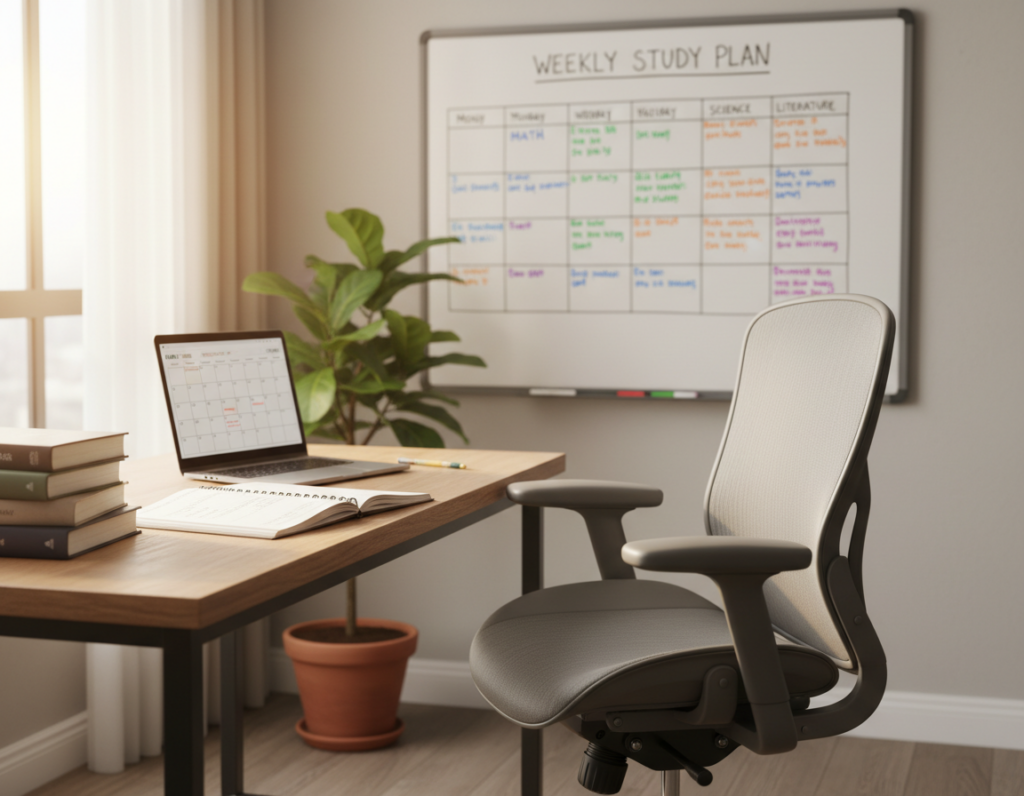
Small changes to your desk and phone can cut distraction and give your brain a clear place to work. A simpler environment helps you start faster and wastes less time warming up.
Declutter your desk and reduce visual noise to lower stress
Clear the surface so only the things you need for one task stay out. Visual clutter pulls attention and raises stress, especially when you already feel overwhelmed.
Try a 2-minute reset: toss trash, stack papers, put chargers away, and leave one notebook open to the right page. That tiny ritual signals your brain that it’s time to work.
Make your phone boring: notification and app tweaks that prevent spirals
Turn off non-essential notifications and move distracting apps off the home screen. Use grayscale or Do Not Disturb during focus windows.
- Keep a few low-friction tools: a lamp, a single notebook, and headphones so setup takes seconds.
- Claim a consistent spot: in a dorm or kitchen, mark a small area as yours for the day and protect it during sessions.
- Use simple blockers: apps that limit phone pulls work best when your physical space is already calm.
When your physical and digital space match, you spend less time on things that slow you down and more time in focused work. These small tips make routines stick for busy students.
Build a stress-free study system you can actually stick to
Start with a tiny plan you can keep: consistency beats intensity when time is tight. Pick a “minimum effective plan” that fits classes, shifts, and commute so you don’t quit after two days.
Choose your minimum effective plan
Define one realistic daily plan—no perfect schedule, just one that fits your energy. Use a short weekly “stress audit”: rate stress, list top stressors, and put hardest tasks where you focus best.
Turn assignments into clear tasks
Define the finish line, list the steps, then pick the smallest next action you can do in minutes. Example: research paper → topic, sources, outline, draft, revise. Each step becomes a task you can check off.
Create a weekly plan with buffer
Build a week that respects your energy: schedule big work when you focus and add about 25% buffer time. Do a 10–15 minute weekly planning session to make your list and protect sessions on your calendar.
Pick success metrics that reduce pressure
“Progress beats perfection.”
Track wins like “2 sessions completed” or “30 minutes of practice questions.” These success markers lower pressure and show real progress.
One clear step: pick tomorrow’s top 1–3 tasks and decide when you’ll do them.
Plan study sessions using time blocks and breaks that match your brain
Using fixed time blocks helps your brain say “I’ll handle this for a bit” instead of panicking about everything.
Pomodoro basics and why time blocks work
Short, timed sessions lower the mental cost of starting. When you promise yourself one contained session, you avoid the “study all night” trap. Think of blocks as tiny commitments that feel manageable.
Try the Pomodoro Plus rhythm for deeper focus
The classic technique is simple: pick one task, set a timer, work until it rings, then take a break.
Pomodoro Plus adapts that to real stamina: try 45 minutes of focused work + a 10-minute active break. DeskTime data also shows high productivity around 52/17, so adjust minutes to match how you feel.
Design short breaks that restore your brain (not doomscrolling)
Good short breaks are active and brief: drink water, stretch, take a quick walk, grab a snack, or stand outside. Avoid scrolling—passive feeds undo focus.
Decide when to extend a session vs. stop and rest
Extend if you’re in flow and accurate. Stop if you reread without progress, make careless errors, or feel anxious. Use a simple timer (phone or app) so the boundary is clear and calming.
One step you can do today: schedule one block on your calendar, set a timer, and start one session even if motivation is low.
Use active learning to study less and remember more
Active learning turns minutes of revision into durable memory instead of wasted rereading. By forcing retrieval, you make the brain rehearse the skill instead of passively familiarizing with notes. That saves time and lowers test anxiety.
Active recall with practice questions
Stop rereading. Turn notes into short questions and quiz yourself for one focused session. Treat mistakes as your next task: they become the to-do list for the following block.
Spaced repetition made simple
Use increasing intervals: same day, two days later, then a week later. This technique prevents last-minute cramming and builds durable recall without marathon sessions.
Interleaving to build flexible learning
Mix topics or problem types in one block so you learn to pick the right method, not just repeat one pattern. This reduces burnout and improves real-world problem solving.
Weekly example: do 15–20 minutes of practice per class across the week instead of one marathon. Track your progress with simple metrics:
- Questions attempted
- Accuracy trend
- Targeted tasks for next session
One step: turn one lecture note into five practice questions and use them in two short sessions this week. You’ll see faster progress in less time and clearer work priorities.
Pick the right tools and apps for distraction-free focus
The right apps turn setup time into a non-issue and keep your attention on what matters. Choose tools that reduce decision fatigue so digital help simplifies your routine instead of becoming another chore.
Focus timers that make minutes feel manageable
Use a reliable timer to promise yourself one small block. A clear timer makes minutes feel doable and eases the worry about long stretches.
Try Focus To-Do or Engross for Pomodoro + task tracking. They pair a timer with a task list so you only show up until the bell.
Distraction blockers for when willpower is gone
When you can’t resist your phone or tabs, use strict blockers. Cold Turkey locks apps and sites hard. Freedom blocks across devices. Use these on hard days.
Digital planning tools that act like a second brain
Notion is your flexible hub: calendar, notes, and templates in one place. Minimalist and Engross keep the screen calm when you need one task at a time.
How to choose fast
- Phone-first distractible: Forest or Minimalist.
- Chronic tab-switcher: Freedom or Cold Turkey.
- Overwhelmed planner: Notion for one trusted list and calendar view.
- Need calm visuals: Serene on Mac or Forest for gentle motivation.
Action: pick one app and test it for 7 days during your next sessions only. Track whether it saves you setup time.
Handle stress and anxiety during study time with quick resets
You don’t need a long pause to regain control. A focused two-minute reset can calm your brain and let you return to one tiny task. Use it mid-session when you notice racing thoughts, avoidance, or the urge to quit.
The two-minute reset you can do at your desk
Box breathing: inhale 4, hold 4, exhale 4, hold 4. Do two rounds.
Grounding (5-4-3): name 5 things you see, 4 you can touch, 3 you can hear.
Progressive release: tense then relax shoulders and hands once each.
When and how to return
Use the reset as a purposeful break, not avoidance. After two minutes, pick one small task and set a 5-minute timer.
| Technique | Use | Quick benefit |
|---|---|---|
| Box breathing | Mid-session or exam | Slows heart rate |
| Grounding scan | When thoughts race | Anchors attention |
| Muscle release | Physical tension | Relaxes body |
| Reset + restart script | After panic | Clear next task, set timer |
Practical note: you can do this in a hallway before a test, at your seat, or during practice sessions at home. Quick rest prevents stress from hijacking more of your time and helps you finish useful work as a capable student.
Adapt your system by subject so you don’t waste time
Not every class needs the same approach—matching method to subject saves you time and confusion.
One-size-fits-all advice wastes minutes. Some subjects need problem drills, others need connection and explanation. Match the work to what the subject actually tests.
STEM: micro-steps and gradual difficulty
Break one problem into tiny steps. Drill formulas with quick flashcards and do a few easy questions first to build momentum.
Humanities: map, teach, and sequence
Create mind-maps to link ideas. Use teach-back: explain a chapter out loud. Run quick timeline reviews to place events and themes.
Languages: short daily immersion
Do a 10–15 minutes daily session. Use low-pressure immersion—music or podcasts—and record yourself speaking for pronunciation practice.
| Subject | Quick method | Check |
|---|---|---|
| STEM | Micro-steps → formula flashcards → ascending problems | Do one full problem without hints |
| Humanities | Mind-map → teach-back → timeline quiz | Summarize topic in 3 sentences |
| Languages | Daily 10–15 min immersion → vocab hooks → speak | Record a 30s clip and listen |
“Match the method to the subject and each minute counts.”
Template: goal → method → practice → check. Pick one class now and design tomorrow’s task using that way.
Protect sleep, energy, and rest so your plan stays sustainable
Skipping sleep feels like extra time now, but it steals recall and speed tomorrow. UC Berkeley research shows sleep deprivation can cut your ability to retain information by up to 40%. That loss makes long nights a poor exchange for hours of work.
Why all-nighters backfire
All-nighters often feel productive because you crank out tasks. In reality you store far less and you think slower the next day.
Less retention, more mistakes, and higher stress means you pay for late nights with weaker performance on tests and practice.
Build a realistic routine around classes, work, and recovery
Anchor sleep first, then schedule study blocks and work shifts around commute, meals, and true recovery time.
Use simple time management tips for the week: pick a consistent bedtime window, block 45–60 minute sessions, and slot tasks around fixed commitments.
- Minimum viable habits: consistent bedtime window, hydration, and a two-step wind-down.
- Weekly planning check-in: review deadlines, choose what to practice each day, and place at least one real break on the calendar.
“Planned rest prevents burnout and keeps steady progress through midterms and finals.”
Conclusion
Finish strong by turning plans into one clear next task you can actually do. Keep your space calm, break big work into tiny tasks, use timed blocks, practice active recall, pick simple tools, and run quick resets when needed.
This approach reduces stress by making the next step obvious and protecting your time. Progress matters more than perfection; let your list guide you, not scare you.
Start small today: choose one task, set a short minute timer, and do a single focused block. Protect sleep and include a real break so you can keep showing up for your work.
One clear next step: set tomorrow’s session now — time, place, and one task — so you don’t negotiate with yourself later.